
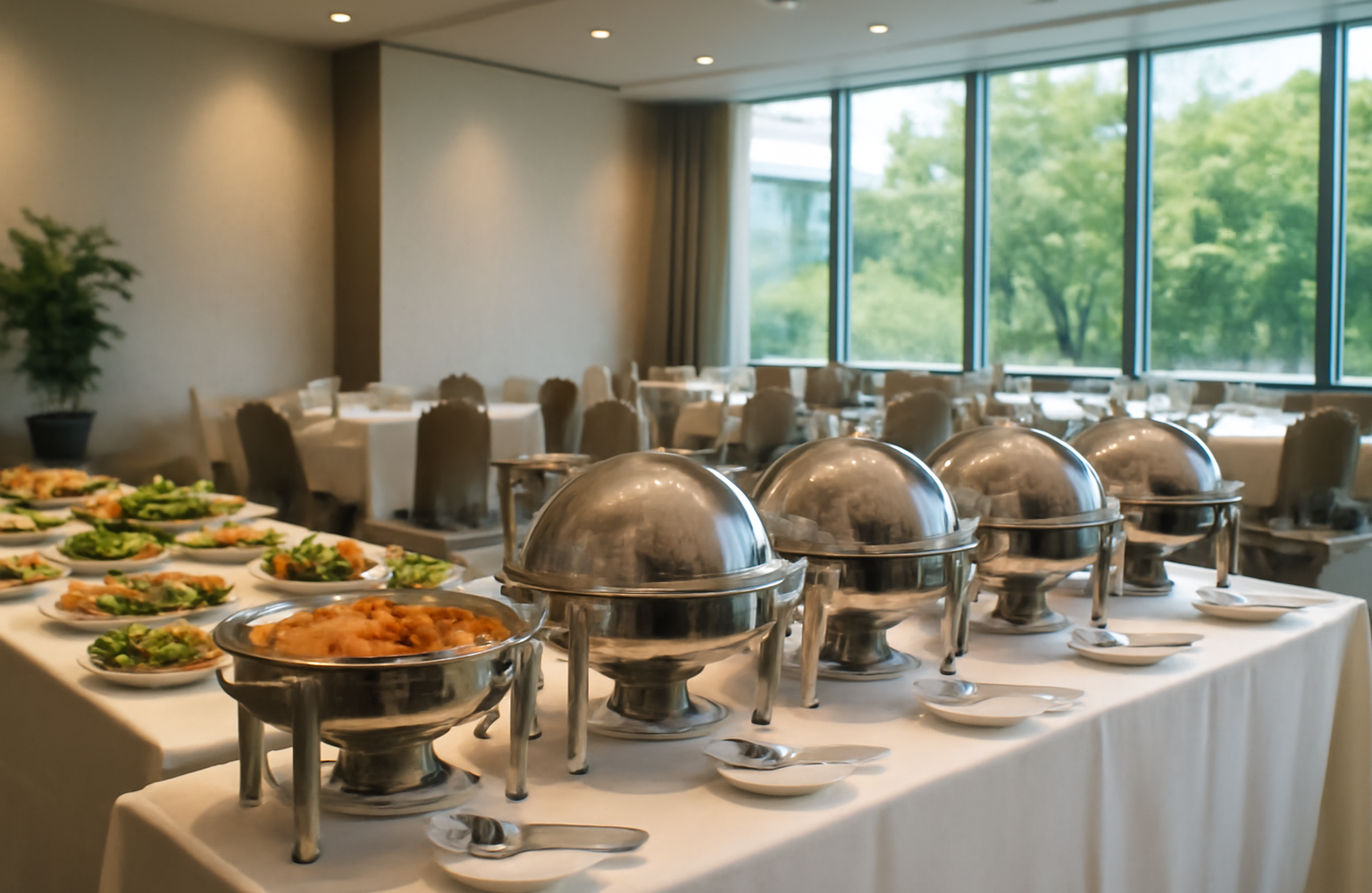
Booking an event space with catering in Singapore can take a huge weight off your planning — one venue, one contract, and the food handled by a team who knows the room. In-house catering suits hosts who value convenience and a seamless service, but it is not the only route, and it is not right for every event. This guide explains how in-house catering works, its pros and cons, typical costs, and how to decide whether it beats bringing your own caterer.
What an event space with catering includes
An event space with catering in Singapore comes with a kitchen and food-and-beverage team on site, so your menu is provided by the venue rather than an outside caterer. Hotels, restaurants, clubs and many function venues operate this way. Typically you choose from set menus or buffet options, and the venue handles preparation, service, crockery, service staff and clearing. The appeal is obvious: the food, the space and much of the logistics come together in one package, which removes a major source of planning stress and coordination.
The details vary by venue — some offer extensive, customisable menus, others a fixed selection — so it pays to compare. A curated event space directory helps you find venues by type and see which offer in-house catering before you enquire.
The advantages of in-house catering
In-house catering earns its popularity for good reasons:
- Convenience — one venue and one team handle the space and the food, cutting down coordination.
- Seamless service — the catering team knows the kitchen, the room and the flow intimately.
- Reliability — established venues have proven systems for serving crowds smoothly.
- Simpler logistics — no external load-in, no separate kitchen setup, fewer vendors to manage.
- Bundled pricing — often a per-head or per-table rate that covers space and food together.
For weddings, corporate dinners and large celebrations where you want a dependable, polished experience without juggling caterers, in-house catering is a natural fit.
The trade-offs to weigh
In-house catering is not without limits. Because you are tied to the venue’s kitchen, your menu options may be narrower than the open market, and specialist cuisines or particular dietary preferences might not be catered for as flexibly. Pricing can be higher per head than some external caterers, and venues often set a minimum spend. You also lose the freedom to shop around for the exact food experience you want. For hosts with strong culinary preferences — a specific cuisine, a favourite caterer, or unusual dietary needs across the guest list — an external caterer may serve better.
In-house vs external catering
The alternative is a venue that lets you bring your own caterer — a blank-canvas function room, loft or outdoor space. External catering gives you full menu freedom and the ability to match cuisine to your event exactly, and it can be more cost-effective. The trade-offs are more coordination, a possible corkage or kitchen fee, and responsibility for logistics like load-in and setup. In short: in-house catering trades some flexibility for convenience, while external catering trades some convenience for flexibility. Neither is universally better — it depends on how much you value control over the menu versus a hands-off experience.
Typical costs and how pricing works
Venues with in-house catering usually price per head or per table, bundling the space and food into one figure, and often attach a minimum spend. Buffets and set menus sit at different price points, and premium venues naturally charge more. Because pricing varies so much with venue, menu and headcount, treat any figure as indicative and always request a current, itemised quote. Watch too for service charge, GST, corkage on any drinks you bring, and charges for additional hours — these add to the per-head rate and are easy to overlook. Getting an itemised quote lets you compare an in-house package fairly against a venue-plus-external-caterer arrangement.
Questions to ask before booking
Before you commit to an event space with catering, confirm:
- Menu options — set menus, buffet, or customisable, and whether tastings are available.
- Dietary requirements — halal, vegetarian, allergies and other needs across your guests.
- Minimum spend — the required food-and-beverage commitment, and how it changes by day.
- What’s included — service staff, crockery, linens, setup and clearing.
- Corkage and cakes — whether you can bring wine or a celebration cake, and any fees.
- Total cost — itemised, including service charge and GST.
Clear answers here prevent surprises and help you judge whether the package genuinely suits your event.
Rounding out your event
With catering and venue handled, you can focus on the touches that make the event memorable. Thoughtful styling lifts even a well-run function room — professional event styling and décor ties the look together — while entertainment keeps guests engaged between courses. A photo booth is a popular choice, giving guests instant keepsakes and generating shareable content while dinner is served. Coordinating styling, entertainment and any AV around your catered venue keeps the whole event cohesive and the planning simple.
Frequently asked questions
What is an event space with in-house catering?
It is a venue with its own kitchen and food-and-beverage team, so the menu is provided by the venue rather than an external caterer. Hotels, restaurants, clubs and many function venues operate this way, bundling the space and food into one package.
Is in-house catering more expensive than external caterers?
It can be, on a per-head basis, and venues often set a minimum spend. External caterers can be more cost-effective and offer more menu freedom, but require more coordination. Request itemised quotes for both to compare true total cost for your event.
Can I bring my own caterer to a venue with in-house catering?
Usually not — venues with in-house catering typically require you to use their kitchen. If you want your own caterer, look for a blank-canvas venue that allows external catering, and check for any corkage or kitchen fees.
Does in-house catering handle dietary requirements?
Most established venues cater for common needs like halal, vegetarian and allergies, but flexibility varies. If you have specific or unusual requirements across your guest list, confirm them before booking and ask whether a tasting is available.
What should I check before booking a catered venue?
Confirm the menu options and customisation, dietary handling, minimum spend, what is included in the service, corkage and cake policies, and the total itemised cost with service charge and GST. Clear answers prevent surprises on the day.
Let one team handle space and food
An event space with catering in Singapore takes much of the stress out of planning, giving you a seamless, dependable experience. As an event studio, we can help you find the right catered venue and add styling, entertainment and photo moments that complete the day. Browse our event space directory and styling services, then request a quote to start planning.