
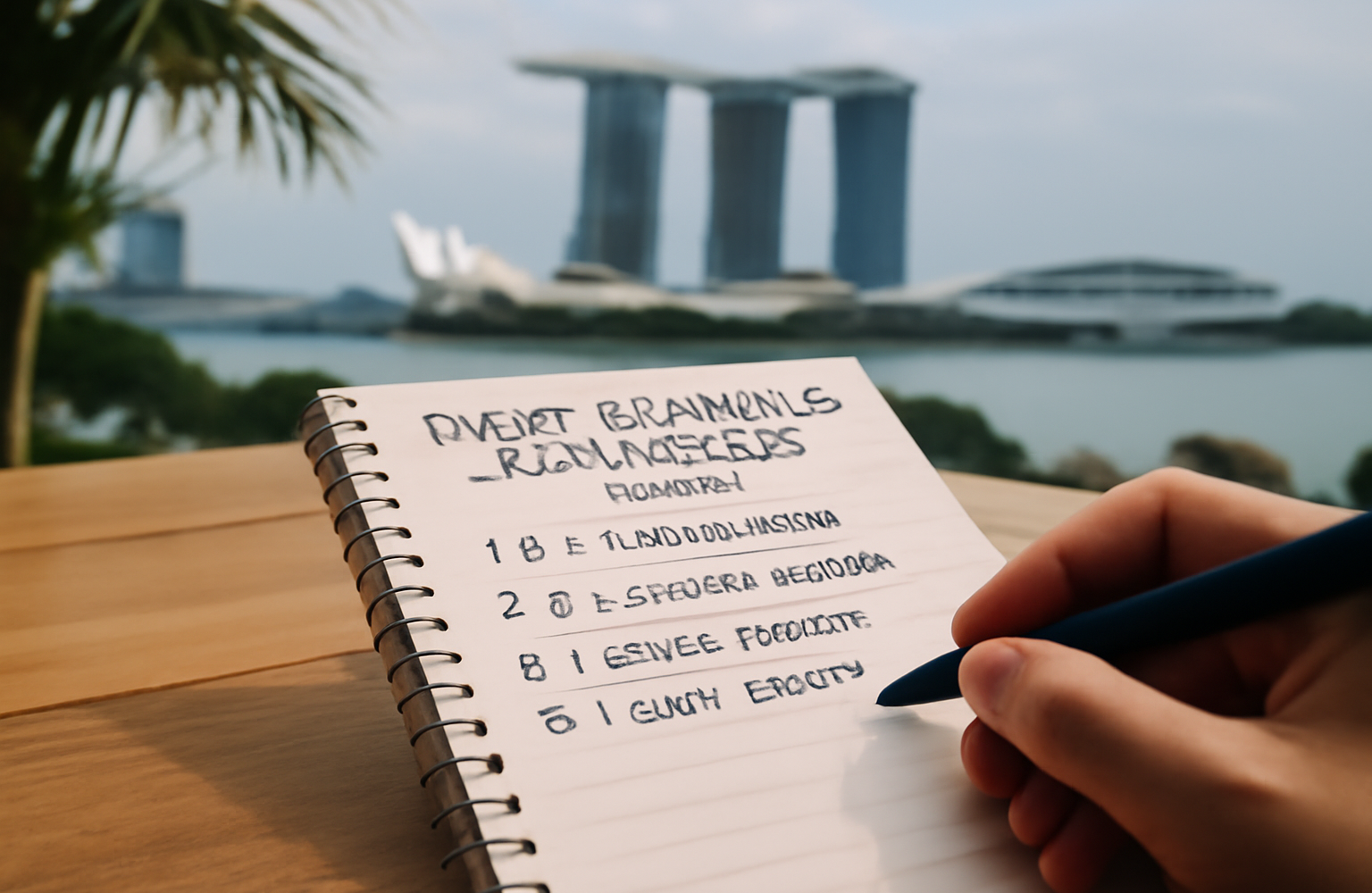
A good event planning checklist is the difference between a celebration that runs itself and one that lurches from one small crisis to the next. Whether you are organising a wedding, a company dinner-and-dance or a milestone birthday in Singapore, the same core sequence applies: set your objectives and budget, lock the date and venue, book vendors, then work through the details and the run-of-show. This checklist lays out that sequence step by step, with the Singapore-specific practicalities — permits, weather, festive-season demand — that catch first-time planners out.
Start with objectives, guest list and budget
Before you look at a single venue, answer three questions. First, what is the event for and what does success look like — a memorable celebration, a productive team offsite, a polished product launch? Second, roughly how many guests? Third, what is your total budget? These three decisions shape everything that follows, and getting them clear early prevents the most common planning mistake: falling in love with a venue or idea you cannot actually afford or fill.
Build your budget as a simple breakdown across the big categories — venue, food and beverage, styling and décor, entertainment, photography, and a contingency of around 10 percent for the inevitable extras. In Singapore, food and venue typically dominate the budget, so pin those down first and let the smaller items flex around them.
Lock the date, then the venue
Your date and venue are the two decisions everything else hangs on, and in Singapore they are tightly linked because popular venues book out months ahead — especially on weekends and around Chinese New Year, the year-end party season and the wedding-heavy periods. As soon as you have a shortlist of dates, start viewing venues, because availability often forces the final choice.
When assessing a venue, look beyond the photos: capacity for your format (seated dinner versus standing reception), air-conditioning and a wet-weather plan, catering rules, parking and public-transport access, power and AV, and the in-and-out times for setup and teardown. Our guide to choosing a function room in Singapore walks through these in detail, and you can browse options across our event-space directory to compare venues by type and occasion. Confirm the booking in writing, including exactly what is and is not included.
Book your key vendors early
Good vendors are booked long before mediocre ones, so secure the essentials as soon as your date is fixed. The typical priority order in Singapore:
- Caterer (or confirm the venue’s in-house catering and menu).
- Photographer and videographer — the best are booked a year out for weddings.
- Entertainment — emcee, live band, DJ or performers.
- Styling and décor — florals, backdrops, table settings.
- AV and staging — sound, lighting, screens.
- Add-ons — a photo booth, dessert stations, favours.
Bundling several of these with one event partner reduces the coordination burden and often the cost. If you would rather hand the whole process over, our event planning service manages vendors, timeline and on-the-day logistics as a single point of contact.
Handle the Singapore-specific logistics
A few practicalities are easy to overlook until they become a problem:
- Permits and licences: outdoor events, amplified music in public spaces, and events serving alcohol may require approvals — check well ahead.
- Weather: for any outdoor element, always have a wet-weather backup. Singapore rain arrives without warning.
- Festive demand: venues, caterers and entertainers cost more and book out around peak periods; plan further ahead for these dates.
- Guest logistics: parking, accessibility and clear directions matter in a city where guests come from all over the island.
- Dietary needs: halal, vegetarian and allergy requirements are standard considerations for Singapore guest lists.
Build the run-of-show and timeline
A run-of-show is a minute-by-minute schedule of the event itself, and it is what keeps the day on track. Map out the full sequence — guest arrival and registration, welcome, speeches, meal service, key moments (cake-cutting, awards, first dance), entertainment and send-off — with realistic timings and who is responsible for each. Share it with every vendor and your key helpers so everyone works from the same script.
Alongside it, keep a master checklist with deadlines counting down to the event: what must be confirmed 8 weeks out, 4 weeks out, 1 week out and on the day itself. A shared document that you tick off as you go is the single most effective tool a planner has.
The final week and on-the-day checklist
In the last seven days, shift from planning to confirming. Reconfirm every vendor’s arrival time and deliverables, finalise guest numbers with the caterer, print or brief the run-of-show, prepare a payment and tips schedule, and pack a contingency kit — chargers, tape, scissors, spare copies of the schedule, basic first aid. On the day, delegate: appoint a point person (or use your event coordinator) so you are not fielding vendor questions while trying to enjoy the event. Do a walkthrough as soon as the space is set, checking staging, sound, seating and signage before guests arrive.
Afterwards, settle outstanding payments, return any hired items, and gather feedback while it is fresh — the notes you make now make planning the next event far easier.
Frequently asked questions
How far in advance should I start planning an event in Singapore?
For a wedding or large corporate event, start 9–12 months ahead to secure top venues and vendors. Smaller parties need 2–3 months. Whatever the scale, lock the date and venue first, then work through vendors and details on a countdown timeline.
What should an event budget include?
Break it into venue, food and beverage, styling and décor, entertainment, photography, and a contingency of around 10 percent. In Singapore, venue and catering usually dominate, so fix those first and let smaller items flex around them.
Do I need permits for an event in Singapore?
Sometimes. Outdoor events, amplified music in public spaces, and serving alcohol can require approvals or licences. Private events in licensed venues usually do not, but always check requirements early, especially for anything outdoors or public-facing.
What is a run-of-show and why does it matter?
A run-of-show is a minute-by-minute schedule of the event with timings and responsibilities for each moment. It keeps vendors and helpers aligned and prevents the day from drifting. Share it with everyone involved so the event flows without constant chasing.
Plan with confidence, or hand it over
A thorough event planning checklist turns a daunting to-do list into a clear sequence you can work through with confidence. If you would rather focus on your guests than your spreadsheets, our event planning team can take on the venue, vendors and run-of-show for you, drawing on our event-space network across Singapore. Get in touch for a quote or WhatsApp us, and we will make sure nothing slips through the cracks.